Pilates Strong
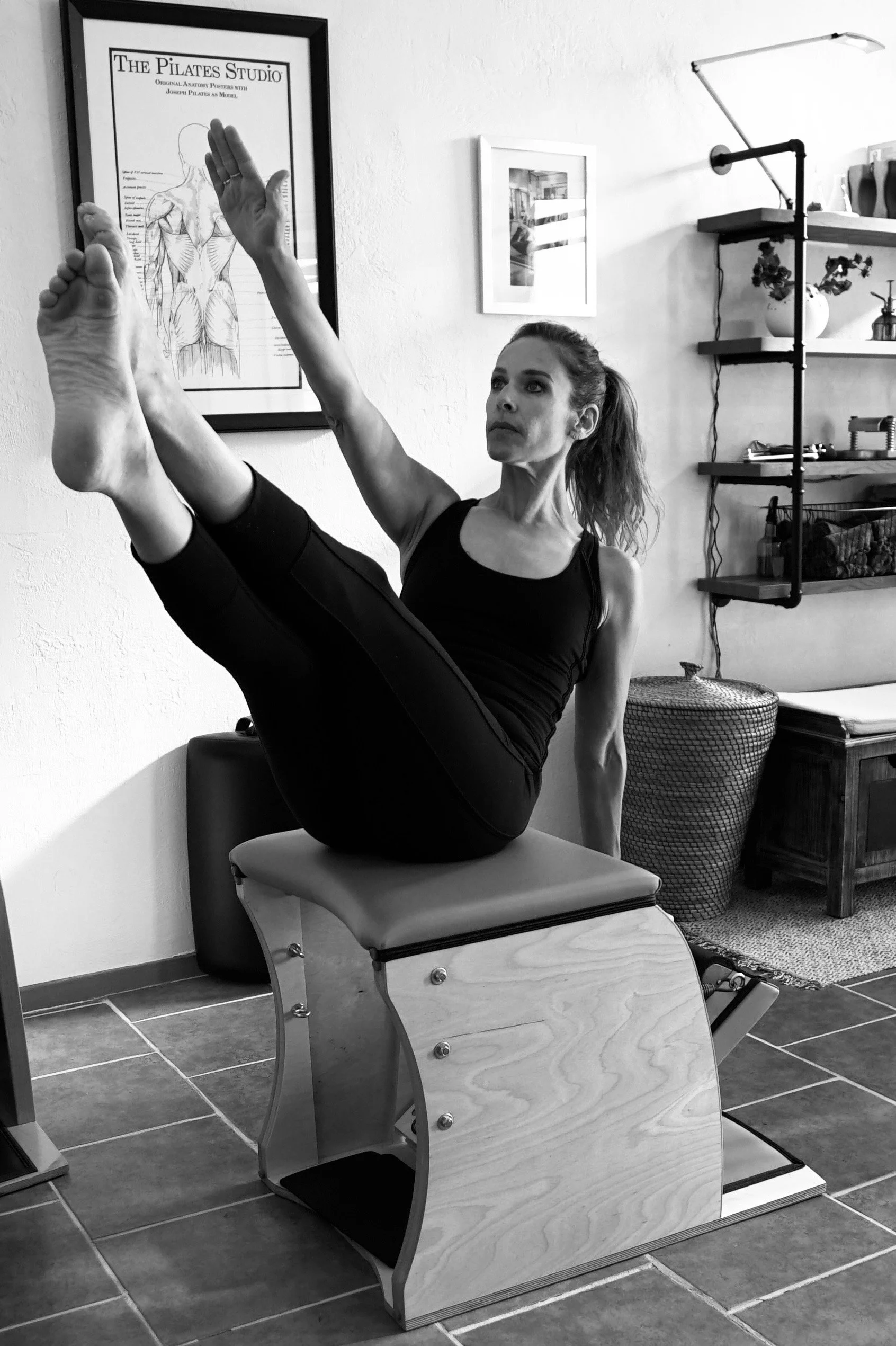
A couple of months ago, a reputable fitness podcast I (no longer) subscribe to, ran a one-hour feature on the role of Pilates and strength. The hosts, ostensible purveyors of a brand devoted to helping you “pump your body and expand your mind,” fell short in their delivery of “raw fitness truth” on this one. Sadly, the show only managed to contribute yet more mischaracterization about the Pilates method. And quite frankly, these misinformed knuckleheads, who couldn’t be bothered to research the topic beyond one of the host’s acquaintances with the owner of a random Pilates studio, need to stay in their own lane.
Which brings me to another source of annoyance; that is, the apparent domino effect of emboldened social media influencers chiming in to amplify a misleading narrative. This large-scale game of telephone is nothing more than a storyline generated and perpetuated by ignorance.
Time to clear the air, and in doing so, I pose the following argument:
Be It Resolved: Pilates Is Strength Training.
About the gym bros podcast, granted, the show headline was centered on body sculpting. However, the content veered well out of that territory, routinely arriving at a convenient, and particularly sweeping generalization about what Pilates is:
So, here’s a novel idea, for fitness pros and especially Pilates teachers. Before offering your opinion, answer the following: What is Pilates?
Call it prerequisite gatekeeping, but I consider it an efficient use of time for those keen on uncovering the truth, and a requisite baseline for productive conversation. Pilates “pros” from all walks can continue to open up studios, start teacher-training programs, self-declare master-instructor status, and call whatever it is they’re doing over there, Pilates; but the privilege of adding your voice to the conversation should be reserved for those able to define it through the lens of the method’s creator. His name was Joe, in case you didn’t know.
By all means, call whatever you do whatever you want, but if you can’t answer the simple question—What is Pilates? —time to sit this one out and let the real experts do the heavy lifting.
Joe called his method Contrology. He wasn’t a dancer or a Yogi; he was a boxer, gymnast, and physical culturist. He didn’t create six principles, but he most certainly had a very specific approach, derived meticulously over the course of several decades. What you see going on in most studios and gyms isn’t anything close to the original. It’s an unfortunate truth and a big headache when treading these topics.
You have something else in mind? Good for you, and you have the Pilates name in the public domain to thank for it; but do those of us who know better a favor and dispense with the equivocation fallacy. I have no time for arguments that rest on inaccurate definitions, and neither should the public.
Strength Training Defined
According to multiple easily discoverable online sources, strength training involves exercise that uses resistance to build strength, increase muscle, and improve fitness. The Pilates method uses springs as a form of resistance, alongside different apparatuses that pose various levels of challenge and support to facilitate progress.
Dude, What About Progressive Overload?
Recurring points from the recent avalanche of social media idiocy include the concept of progressive overload—the idea that in order to build strength, you must increase resistance over time. The conclusion, predictably, is that Pilates can only take you so far.
But there’s a big flaw in this line of reasoning.
The problem is not whether progressive overload works. It’s that it’s the wrong lens. The method is not organized around increasing load, so applying that framework misses the point entirely.
My teacher, Jay Grimes, who studied with Joe in the 1960s, referred to a specific quality of movement in practicing Contrology. Jay called this quality two-way-stretch, which can be described as an action that originates from and is organized through the body’s center. The effort is continuous and continuously refining.
Based on this qualitative understanding, and when the work is performed with this level of demand, repetition becomes self-limiting. The challenge of Pilates concerns how the work is carried through the body; how force is generated, organized, and sustained without interruption. You can’t address these challenges by simply adding another spring or increasing tension.
If you feel you’ve outgrown Pilates, you haven’t surpassed the method—you’ve simply ventured outside of it.
I’ve been practicing Pilates for 23 years. The work has only become more demanding. It doesn’t get easier and it’s not because I’m avoiding resistance. My muscle mass continues to increase, and my bone density is top-tier. I’m 50, and by most conventional standards, I should be chasing more, but I don’t, because I haven’t needed to.
Pilates is not a limited version of strength training waiting to be supplemented. It’s a complete system with its own internal logic. If you try measuring the method with the metrics of another system, don’t be surprised if you misunderstand what it’s doing.
But Bone Density’s Important, Too, Bro
It is. Bone responds to load. The strongest signals for increasing or maintaining bone density tend to come from weight-bearing impact and resistance. That much is well established.
Pilates is not an impact-based system, and it’s not designed around maximal loading. The method operates through a different mechanism, developing strength through how force is organized and sustained, as opposed to how much weight is moved. It plays a meaningful role in skeletal health that positively impacts structural support, coordination, and control.
For what it’s worth, I get my bone density checked regularly. Same with muscle mass.
Lastly, I want to turn your attention to this excerpt from Pilates’ Return to Life Through Contrology. It seems fitting to let the creator of the method have the last word:
Study carefully. Do not sacrifice knowledge to speed in building your solid exercise regime on the foundation of Contrology. Follow instructions exactly as indicated down to the very smallest detail. There IS a reason! Contrology is not a system of haphazard exercises designed to produce only bulging muscles. Just to the contrary, it was conceived and tested (for over forty-three years) with the idea of properly and scientifically exercising every muscle in your body in order to improve the circulation of the blood so that the bloodstream can and will carry more and better blood to feed every fibre and tissue of your body. Nor does Contrology err either by over-developing a few muscles at the expense of all others with resulting loss of grace and suppleness, or at a sacrifice of the heart or lungs. Rather, it was conceived to limber and stretch muscles and ligaments so that your body will be as supple as that of cat and not muscular like that of the body of a brewery-truck horse, or the muscle bound body of the professional weight-lifter you so much admire in the circus.