What Do We Mean By Apprenticeship?
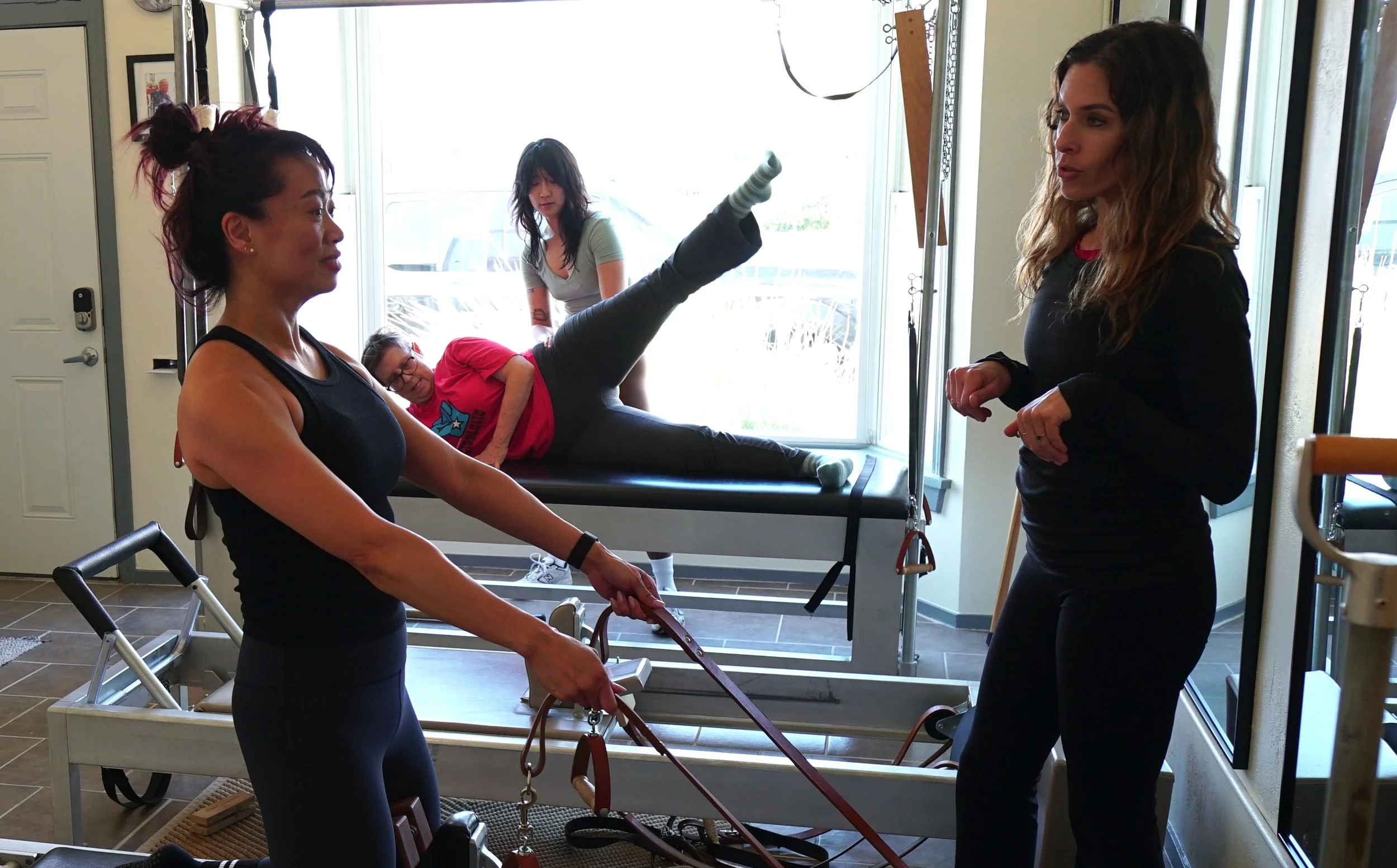
I have been thinking a lot about Pilates vocabulary lately. Not just the obvious words, like Classical, Contemporary, Reformer, Mat, etc., but also terms that can carry a kind of borrowed authority. Words that sound serious, suggesting depth, lineage, care, and tradition.
One of those words is apprenticeship.
In the Pilates industry, apprenticeship has become an increasingly attractive term. It sounds more personal than teacher training, more serious and committed than certification, and more extensive than a course. Apprenticeship suggests that something meaningful is carefully being passed down from one person to the next. And, with reference to the etymological connotations of the term, suggests a length of time, of dedication, of persistence, of supervision, of standards. A close enough relationship to developing a craft, a complicated trade, or, in my case, the understanding of a method built by a physical culture genius over the course of his entire lifetime.
That is exactly why the term apprenticeship deserves scrutiny.
Because one must question whether recent references are working to uphold an actual standard or to simply elevate a brand and find new ways to increase profit.
I’m curious about the intersection between semantic wordplay and marketing in the Pilates industry, and in this exploration, my aim is to build a vocabulary for discernment.
Defining Apprenticeship
Let’s take a closer look at Pilates teacher education language and establish a concise definition of a few terms:
Certification: a credential awarded after completing stated requirements. There’s a spectrum of certifications, which could include completing an online course, a weekend-intensive, apparatus-based certifications, along with a comprehensive training consisting of at least 450 hours. In the United States, one can also choose to pursue an NCCA-accredited NCPT designation (mat or comprehensive), though, it should be noted, at the time of this writing, the barrier to entry is embarrassingly low.
Teacher Training: a structured educational program; often modular and standardized. A training manual is typically involved. Many in the industry refer to the terms “teacher training” and “certification” interchangeably; that is, one can complete a Pilates teacher training program and consider themselves certified. Note that neither a certification nor completion of a teacher training program is required to teach Pilates.
Internship: short-term exposure to a field or work environment. An internship is akin to what one might experience in a field of academic study as a complement to formal rigorous post-secondary, post-baccalaureate, or post-graduate education.
Apprenticeship: long-term, supervised and customized development in a craft, trade, or for our purposes, the Pilates method, under someone with real authority and experience. Apprenticeship comprises an extended period of study with the primary teacher, or mentor. The apprentice will spend time observing, practicing, assisting, teaching under supervision, receiving regular feedback, learning about how the method organizes the body, learning how to teach to different bodies, and over all, cultivating the requisite skills to become a truly knowledgeable teacher. Apprenticeship is wholly immersive. It’s so much more than attending modular training and the fulfilment of hours.
Mentorship: Mentorship refers to the guidance and attention a developing teacher receives from a qualified teacher of teachers. Mentorship can refer to the relationship inside an apprenticeship structure, but for true mentorship to take place, the mentor would need to devote a significant amount of time and energy to substantially influence the development of a teacher.
In wrapping up our common Pilates edu term definitions, you should also know that the name “Pilates” is unregulated, which means anyone can call what they teach Pilates, regardless of training and education. Yes, that means you can call yourself a Pilates teacher right now; though, without legitimate training and education, I’m afraid you won’t be able to teach at my studio.
Jay Grimes, On Pilates Teacher Training Programs
Jay Grimes, my teacher, who learned directly from Joe Pilates, was deeply skeptical of modern teacher training programs because he understood that the Pilates method does not transmit well through compartmentalization. The method is not a pile of exercises divided neatly into beginner, intermediate, and advanced units. It is a living system taught through bodies, judgment, repetition, correction, restraint, and time.
A certificate may mark the beginning of responsibility, not the end of learning. In Jay’s framing, a teacher training certificate was closer to a learner’s permit: permission to begin learning how to teach, not proof that one had arrived.
Sorry, No Shortcuts
Developing a Contrology practice takes as long as it takes, as does learning how to teach the Pilates Method. I assure you, there are no shortcuts – I’ve tried!
In order to effectively teach Pilates, one must develop the ability to see the person in front of them. It’s a skill that can’t be replicated through memorizing exercise names, levels (none exist, by the way), modifications (also not a thing), or safety rules. Some of those aspects may be useful (not the levels and modifications), but they do not make someone a teacher.
The teacher must know the method, bodies, the apparatus, how to choose, when to stop talking, when to push, when to leave something alone, and how the whole system develops over time.
When a teacher training program with minimal prerequisites, a short timeline, and/or limited supervised teaching calls itself an apprenticeship, the issue is not me grumbling over semantics. That word is doing marketing work and it borrows the seriousness of an older tradition while functioning more like a compressed training product. It’s more suited for the term “internship,” albeit an unqualified one, because–remember–an internship should complement rigorous academic study.
Defining True Apprenticeship at Pilates DNA
Not everyone needs to become a teacher. Not everyone who loves Pilates should teach Pilates. And not everyone who wants to teach Pilates is ready to apprentice.
At Pilates DNA, apprenticeship is serious and selective. Apprentices develop a real relationship to the method, but this is not the path for everyone. It’s a time investment for all involved (apprentice and mentor) and requires a sustained, energetic commitment to observation, practice, supervised teaching, and a willingness to be shaped by the method over time.